
Trade finance inside ERPNext
Your ERP knows the order. Your bank knows the LC.
Invento connects the document that starts the transaction to the instrument that makes the shipment possible, so importers and exporters can see the full commercial chain in one system.
The invisible instrument
The document that decides everything is the one your system cannot see.
A purchase order is a promise between you and your supplier. A letter of credit is a promise from a bank, and it is the one that decides whether goods move and when money leaves your account.
ERPNext already handles
- Purchase and sales orders
- Multi-currency transactions
- Landed cost against receipts
- Stock, valuation and accounts
The trade desk handles by hand
- Proforma invoices, retyped
- LC terms, held in bank folders
- Utilisation, tracked by phone
- Back-to-back exposure, in Excel
The business cost
When the LC is outside the ERP, the risk sits inside the business.
The problem is not that trade finance is complex. The problem is that the system running the transaction has no view of the instrument controlling it.
Simple questions need a bank call
How much is left to draw? Which shipments were presented? When does the credit expire? There is no live answer.
The same data is entered four times
Order, proforma invoice, LC application and commercial invoice. Every re-entry creates another chance for discrepancy.
One mismatch holds the money
A mistyped quantity or description restarts document examination while goods and working capital both wait.
A bank has a maximum of five banking days after presentation to decide whether documents comply. If it fails to give notice in time, it loses the right to refuse them. Source: ICC UCP 600, Articles 14(b) and 16(f)
The operating reality
Five LC types. Five different effects on cash, timing and exposure.
The name on the document is not a technicality. It tells your finance team when the obligation becomes real and what must be monitored.
Sight LC
The bank pays when clean documents are presented. Simplest, and hardest on cash.
Usance LC
Payment falls due after an agreed period. A working-capital tool with a maturity date that must be visible.
Back-to-back LC
Opened against an export LC to finance raw materials before the buyer pays.
Standby LC
A guarantee rather than a payment method. It pays only if a party fails to perform.
Revolving LC
Reinstates for repeat shipments instead of requiring a new credit each time.
The commercial distinction: usance and back-to-back credits create future payment obligations. If those liabilities exist only in a spreadsheet, they are missing from the financial picture managers use to make decisions.
What Invento built
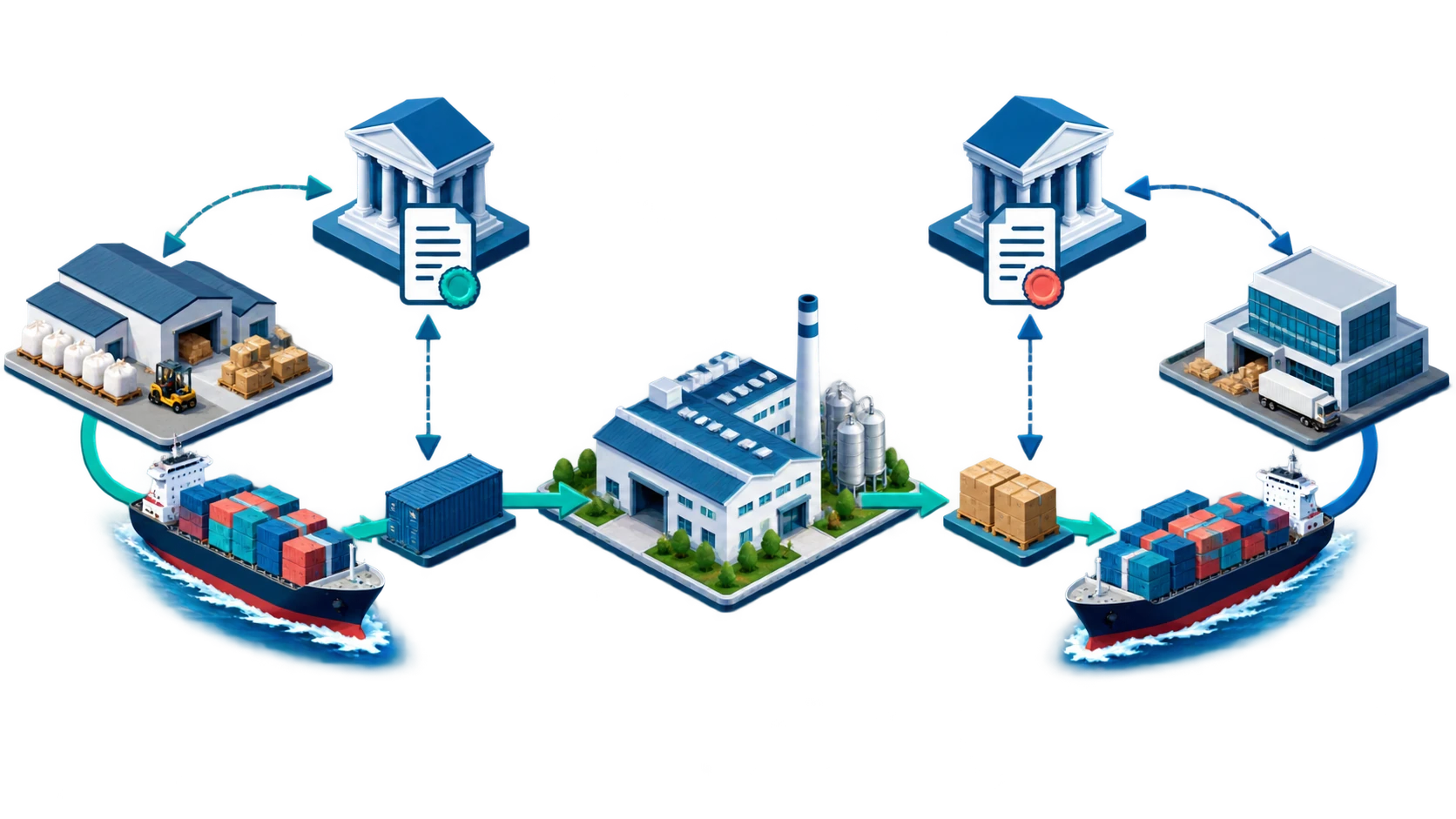
Two applications. One continuous document chain.
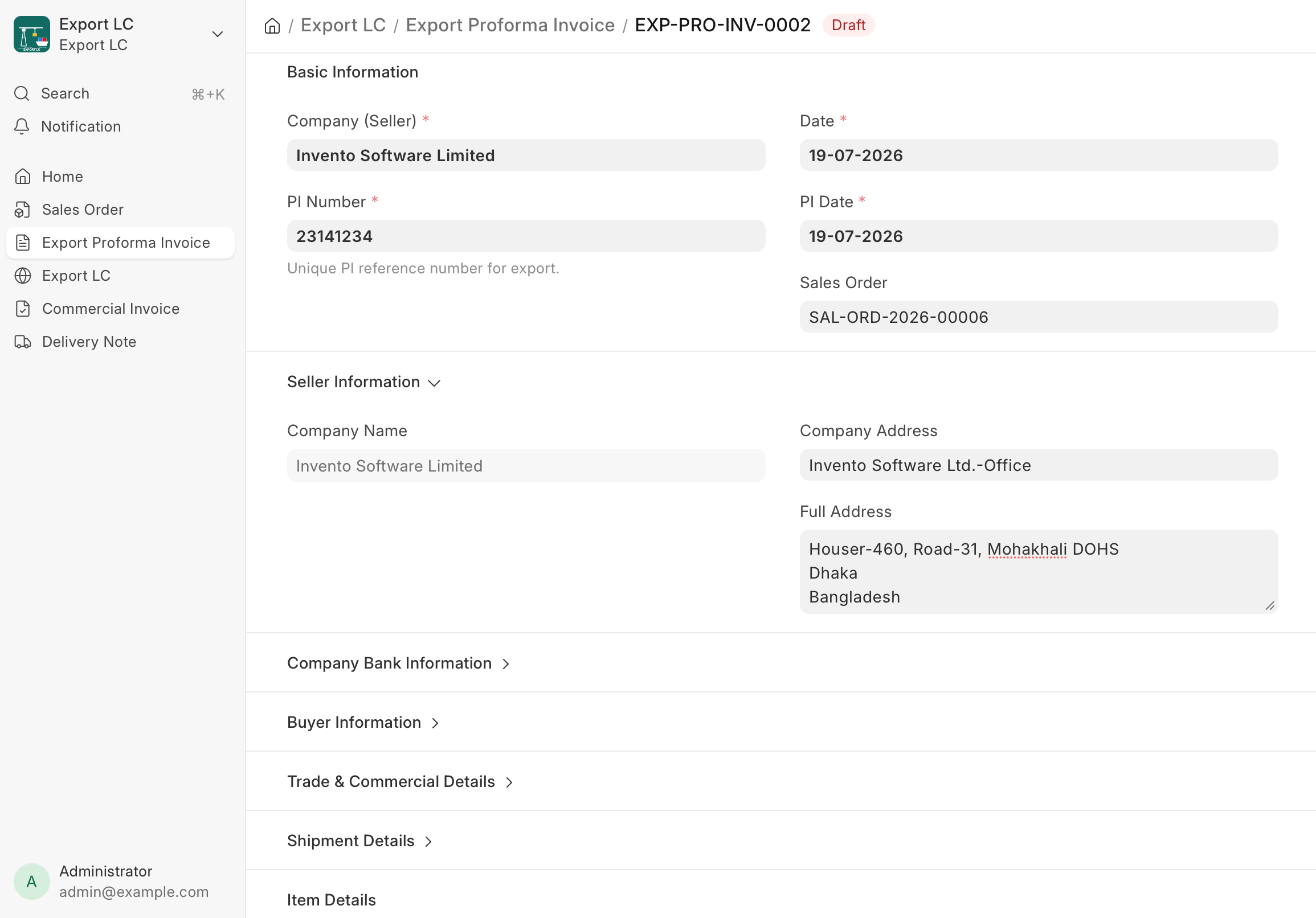
ERPNext v16 has no native letter-of-credit module, doctype or field. Import LC and Export LC extend its buying and selling workflows without replacing them.
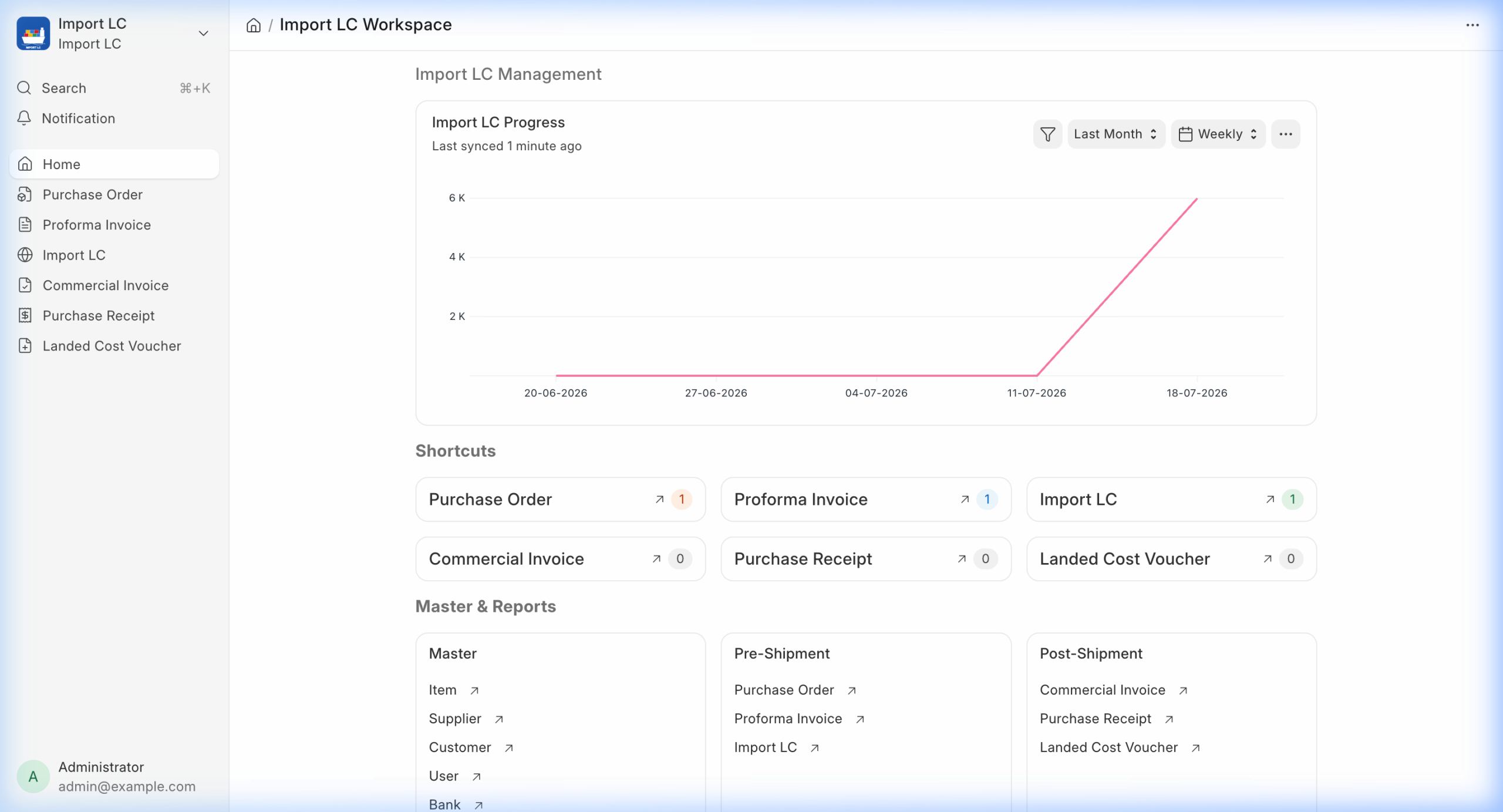
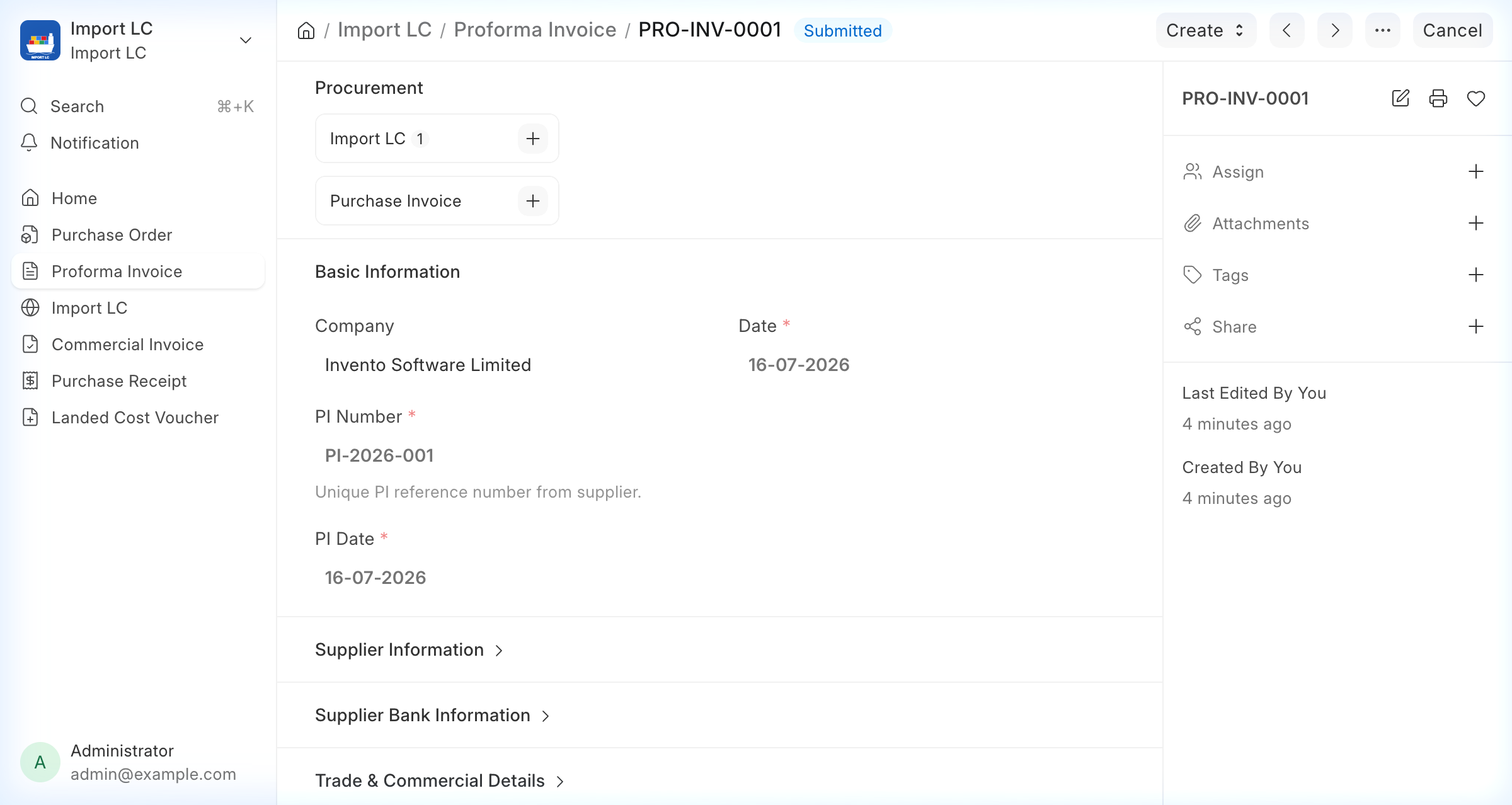
Purchase order to purchase invoice
The approved purchase order starts the lifecycle. Items, currencies and commercial terms flow into the proforma, LC and purchase invoice.
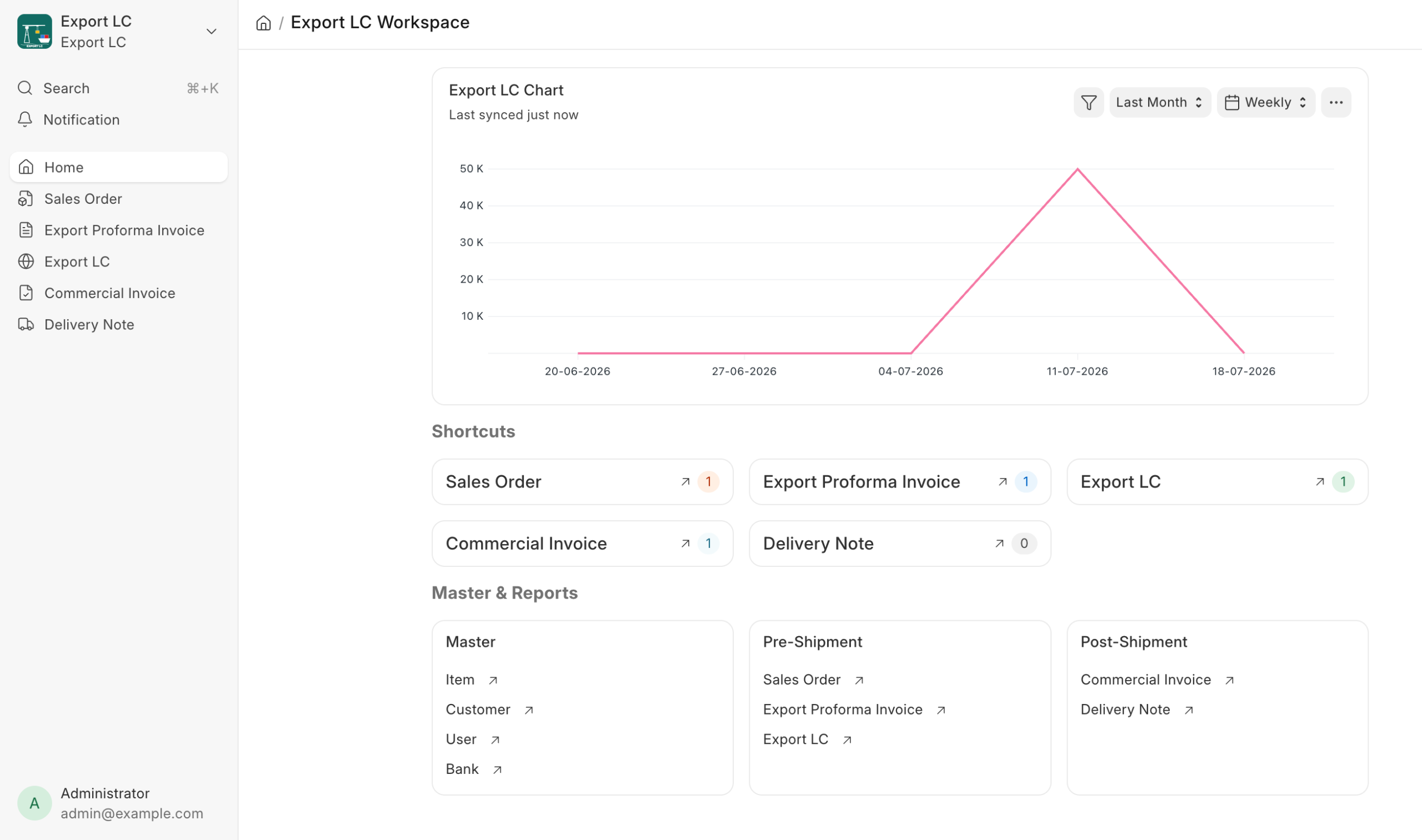
Sales order to delivery
The approved sales order starts the export flow. Credit data moves through the proforma, commercial invoice and delivery note.
The design decision that matters
We mapped the record to the format banks already use, instead of inventing another format for the business to translate.
Aligned to SWIFT MT700
Transcription, not interpretation.
When a bank issues a documentary credit, it uses a defined MT700 field structure. Aligning the ERP record to those same fields means the bank's terms arrive in a shape the system already understands.
That reduces ambiguity at the most fragile handoff in the process: the moment commercial data becomes a bank instruction.
SWIFT completed a major cross-border payment migration in November 2025, but that cutover did not retire MT700 trade-finance messages. They remain in service in 2026, with no announced retirement date. Source: SWIFT
Built for Bangladesh trade
In ready-made garments, the problem is doubled.
Exporters do not open one letter of credit. They open two: the master export LC and a back-to-back LC that finances the raw materials needed to fulfil it.
Bangladesh Bank's foreign-exchange guidelines govern import LCs in Chapter 7 and export and back-to-back arrangements in Chapter 8; the facility is restricted to bonded-warehouse export units.
That means two instruments, two expiry dates, two document sets and one shipment, with a value-addition requirement over the top. The apps handle the two directions separately so the exposure is visible before timing slips.
What changes operationally
From a fragmented trade desk to one accountable record.
None of this makes a letter of credit simpler. It makes it visible, which is the part your ERP was supposed to do in the first place.
Available now
Open-source apps, ready for ERPNext v16.
Both applications are MIT licensed and published on the Frappe Marketplace, so your technical team can inspect the code before it becomes part of a finance workflow.
Import LC
Connect purchase orders, proforma invoices, bank credits and purchase invoices in one controlled flow.
Export LC
Connect sales orders, export contracts, LC utilisation, commercial documents and delivery activity.
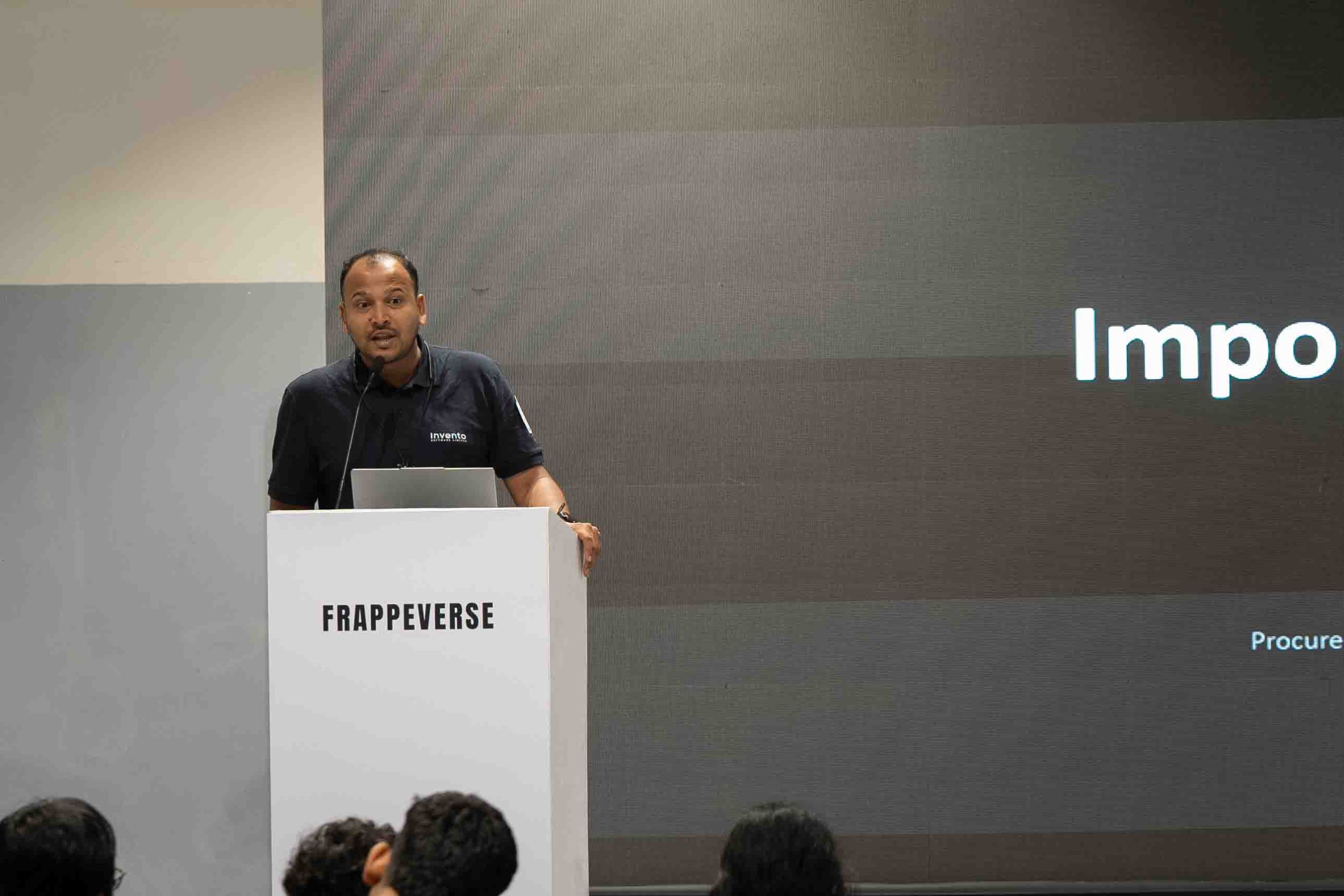
As far as we can establish, these are the only purpose-built LC applications available for ERPNext. Invento demonstrated the work at Frappeverse Mumbai 2026.
Common questions
Clear answers for finance and operations teams.
The applications extend ERPNext's transaction layer with the trade-document layer around it.
What is an import LC?
A letter of credit issued by your bank to your supplier's bank, promising payment once the supplier presents documents matching the terms of the credit. It substitutes your bank's creditworthiness for yours, enabling trade between parties that may never have worked together.
What is the import LC procedure in Bangladesh?
You agree terms and receive a proforma invoice; apply through an authorised dealer bank; the bank issues the credit; the supplier ships and presents documents; the bank examines them and pays or raises discrepancies; then you clear the goods and settle.
What is a back-to-back LC?
A credit opened on the security of an export LC already received, allowing an exporter to buy the raw materials needed to fulfil the export order. In Bangladesh, the facility is restricted to bonded-warehouse export units.
What is a usance LC?
A credit where payment falls due a set period after presentation instead of immediately, giving the buyer time to sell the goods before paying.
What is MT700?
The SWIFT message type banks use to issue a documentary credit. Its standard field structure makes credit terms transferable between the bank and the ERP record without reinterpretation.
Does this replace ERPNext buying and selling?
No. Buying, selling, multi-currency accounting and landed cost stay where they are. The applications add the trade-document layer around those standard workflows.
Ready to make every LC visible inside your ERP?
Invento has implemented ERPNext in Bangladesh since 2015 for importers, distributors and manufacturers whose businesses run on letters of credit.
More from us
Related work and practical guides to help you plan your next step.
 Garment accessoriesTrade Mode TrimmingThree businesses, paper records and a question about how one system could connect them.Read the case study
 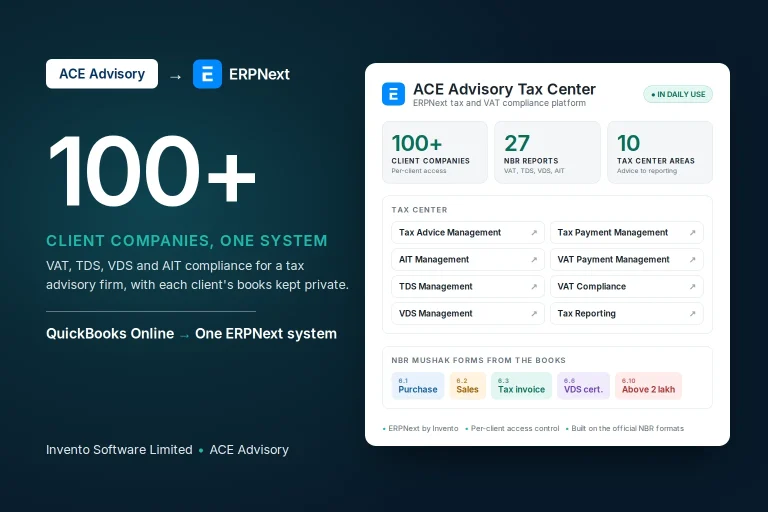 Accounting and complianceACE AdvisoryA tax practice outgrew QuickBooks. Its next system had to handle much more than the books.Read the case study
 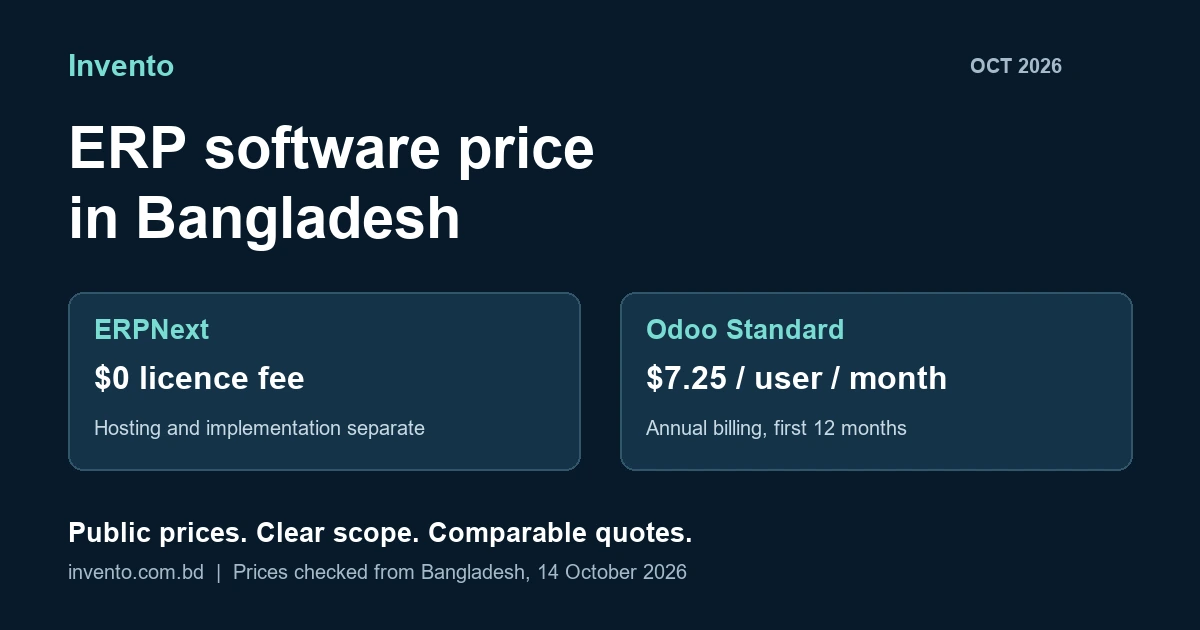 ERP buying guideERP software price in BangladeshPublic licence and hosting prices, and the questions that make implementation quotes comparable.Read the guide