
Implementation case study / Manufacturing / Bangladesh
How Rahim Workshop Is Connecting Manufacturing Operations with ERPNext
A commercial poultry cage order moves through sales, material sourcing, fabrication, inspection, dispatch, installation and collection. Invento Software Limited is bringing that entire operating chain into one unified ERPNext workflow.

The business behind the system
The work continues beyond the factory floor
Rahim Workshop manufactures and installs commercial poultry cage systems for agricultural organizations and commercial poultry farms across Bangladesh.
Raw materials come from local and international suppliers. Galvanized components are fabricated in the workshop. Finished systems are dispatched and installed on-site at customer facilities. Every stage directly depends on the one before it.
 ERPNext on the Frappe framework
The operating chain
One customer promise crosses nine handoffs
The original process relied on spreadsheets, verbal updates and WhatsApp groups. Each handoff could hold a different, unverified version of the job.
How ERPNext Coordinates Shop-Floor Operations
Sales & Engineering
Customer requirements converted into verified, production-ready specifications.
Sourcing & Inventory
Raw materials purchased and reserved across physical factory warehouses.
Fabrication & Quality
Cutting, bending and welding tracked via digital operator job cards.
Site Dispatch & Cash
On-site installation sign-off directly unlocks milestone tax invoicing.
Where visibility broke
The factory had activity but no shared operational picture
Materials were hard to place
Procurement, production and dispatch each held a fragmented view of raw materials, work-in-progress and finished goods.
Updates travelled by conversation
Workshop managers lacked one live record of planned work, active operations and production bottlenecks.
Contribution was difficult to trace
Multiple technicians contribute to each finished cage, but manual coordination did not connect each operation to individual job progress.
Quality sat beside production
Subcontracting, incoming inspections, rejected inventory and corrective rework needed a connected audit trail.
Collection was separated from delivery
Customer follow-up, dispatch challans, tax invoicing and payment monitoring were handled across disconnected steps.
The objective
One record from enquiry to payment
The solution connects the full operating flow instead of treating ERPNext as a collection of isolated software modules.
A customer order informs material demand and procurement. Material issuance connects directly to production work orders. Job activity connects to quality inspection. Dispatch, on-site installation, commercial invoicing and payment collection stay tied to the exact same customer contract.
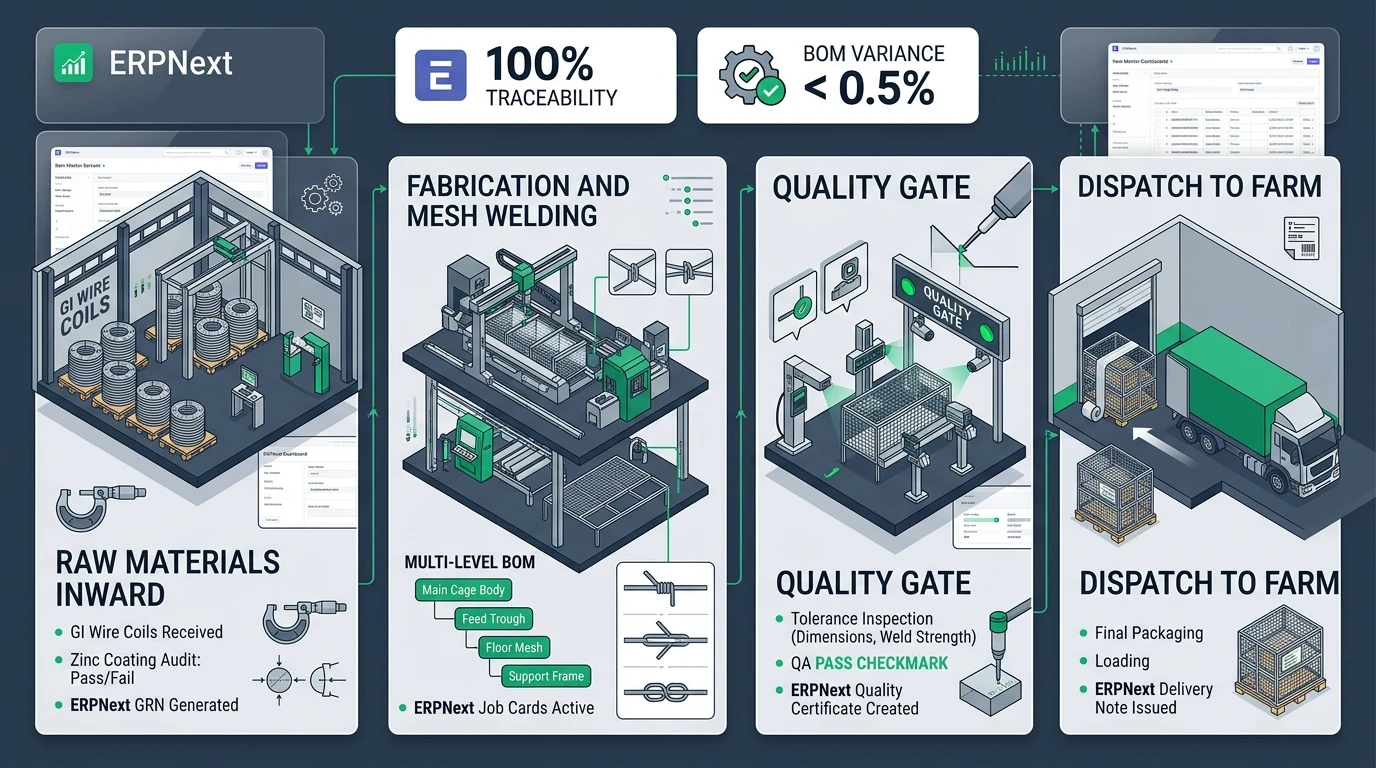
The ERPNext Quality & Rework Loop
Quality Control Engine
Technician finishes cage fabrication operation at workstation.
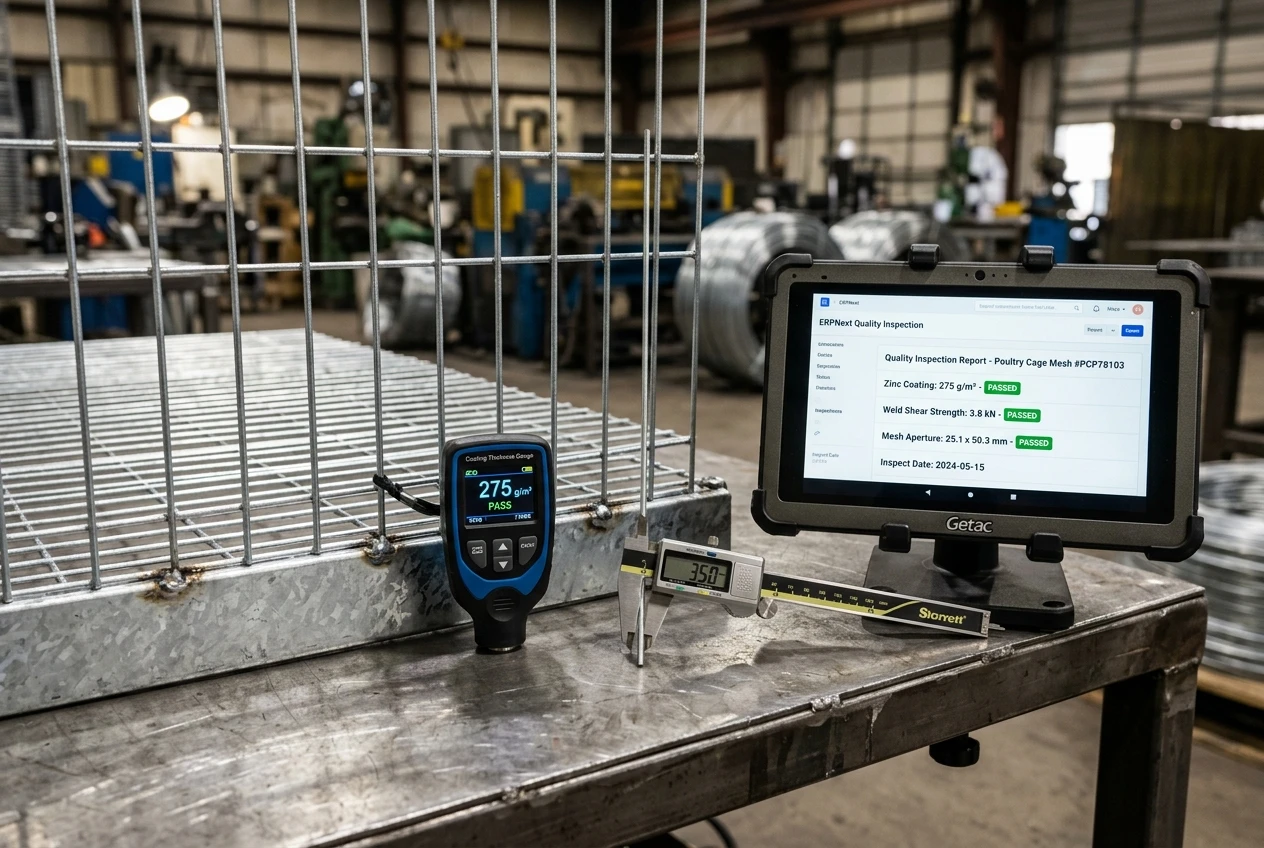
Galvanizing layer thickness, weld strength & cage tolerances validated.
Auto-routed to Finished Goods Store ready for shipping.
Moved to Quarantine Store with scrap reason & rework order.
Raw material lot, technician ID, inspection sign-off and costs recorded.
Configured in ERPNext v15
What Invento is implementing
Eleven workstreams arranged as five connected layers
ERPNext is being configured around the movement of customer demand, raw materials, workshop floor operations, quality assurance, and finances.
Commercial
- CRM and customer follow-up
- Quotations and sales order management
Procurement
- Local purchasing workflows
- Import purchasing and L/C tracking
- Supplier management and pricing
Operations
- Multi-warehouse inventory management
- Production planning (BOM & work orders)
- Shop-floor job cards and productivity tracking
Control
- Subcontracting and external job-work
- Quality inspection checkpoints
- Rejected inventory and scrap logging
Business records
- Chart of accounts, billing and receivables
- Employee HR records, attendance and payroll
Delivery approach
Configure the process then test it in real work
The implementation follows a focused three-week agile delivery plan, moving from operational discovery and configuration to rigorous testing, user training and go-live.
Discovery and requirements
Map how Rahim Workshop handles enquiries, materials, fabrication, installation and collection, then define how ERPNext connects each handoff.
Core configuration
Set up inventory, procurement, sales, manufacturing planning, job cards and accounting, together with the supporting workflows in scope.
Data migration
Cleanse and migrate relevant source data from legacy spreadsheets into structured ERPNext records and item masters.
Training pilot and testing
Train the initial 15 to 20 core users, validate live workflow scenarios with the team, and correct exceptions before factory rollout.
Post go-live support
Provide dedicated floor support to resolve early operational questions and fine-tune configured workflows based on daily shop-floor use.
Why the last mile matters
The manufacturing record must reach the installation site
For Rahim Workshop, a finished cage in the factory is only half the customer promise.
Dispatch, transport and on-site installation complete the contract. Keeping those stages connected to the order helps the team see what is ready, what has left the factory, what remains to be installed and exactly when payment milestones can be invoiced or collected.
This is why the scope integrates CRM, sales, inventory, manufacturing, dispatch and accounts receivable instead of treating production as an isolated factory activity.
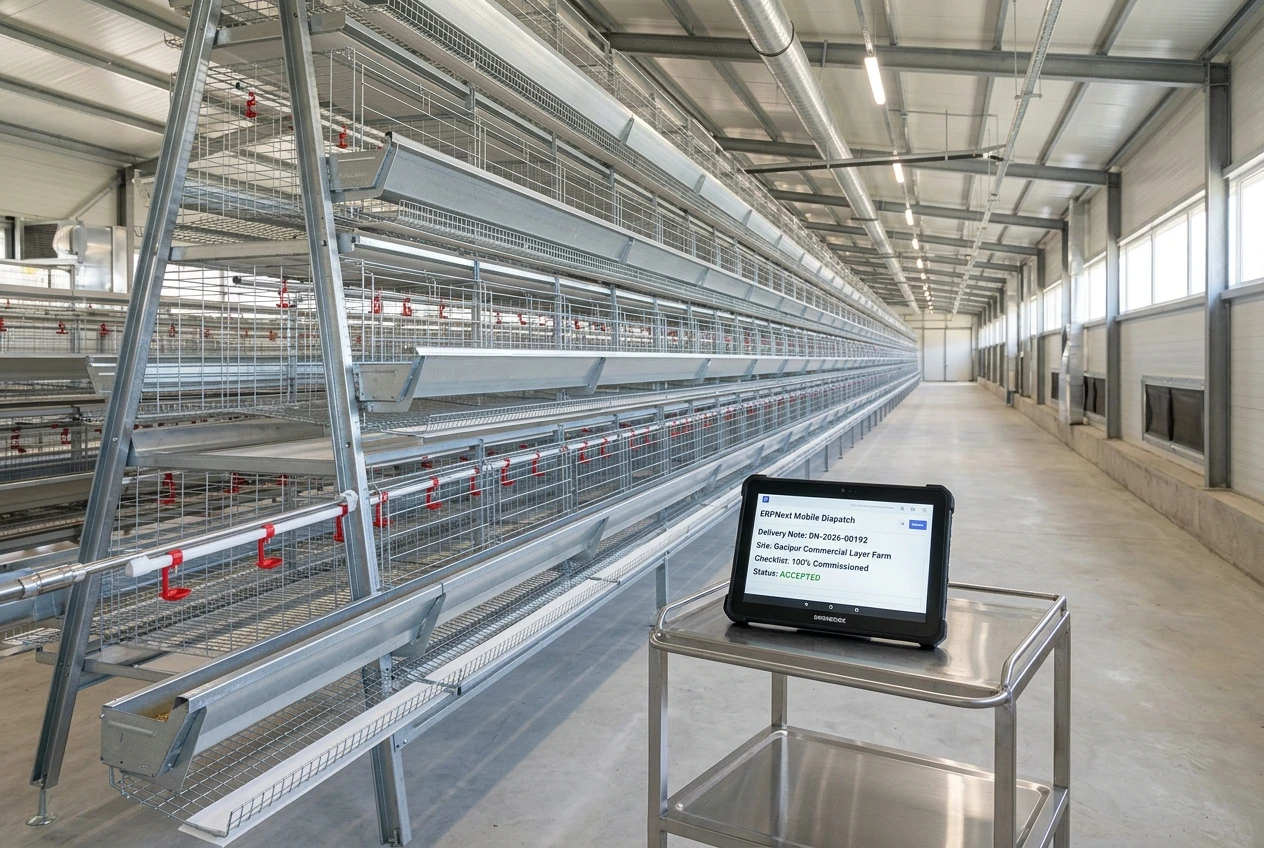
Connecting Factory Dispatch with On-Site Sign-Off & Billing
Finished cage assemblies loaded; ERPNext generates Delivery Challan referencing the sales contract.
Status: In TransitErection team aligns multi-tier poultry batteries at customer farm; client supervisor signs Installation Note.
Status: Site AcceptedVerified installation milestone automatically triggers Sales Invoice in ERPNext Accounts module.
Status: InvoicedPayment recorded against invoice; real-time Accounts Receivable Ledger tracks outstanding dues.
Status: ReconciledFrom fragmented to connected
One system brings visibility across departments
Operational visibility
A clearer view of every job, from material to payment
By connecting the workflow in ERPNext, each department works from the same single operational record instead of chasing updates across spreadsheets, messages and separate files.
Common questions
ERPNext manufacturing for a connected operation
What does ERPNext cover for manufacturing?
ERPNext comprehensively integrates inventory, procurement, production planning, manufacturing job cards, quality, sales and accounting. The configured scope depends on the exact handoffs a business needs to coordinate.
Which processes are included for Rahim Workshop?
The implementation scope includes inventory and warehousing, local and import procurement, suppliers, sales CRM, manufacturing planning, job cards, subcontracting, quality inspection, accounting, and HR/payroll.
Can ERPNext track quality and rejected inventory?
Yes. The Rahim Workshop design includes quality inspection checkpoints and rejected inventory controls so those events remain traceable within the relevant manufacturing process.
Who will use the system?
The initial rollout is designed for a 15 to 20 person core user group across operations, shop-floor production, procurement, storekeeping and administration.
Which handoff is hardest to see in your factory today?
Invento maps the process, configures the right ERPNext manufacturing workflow, and supports your team from rollout through day-to-day use.