
Case study · Food manufacturing · United Kingdom
ERPNext for food manufacturing: how Earthnutz keeps the promise on every pack
Abby Singh started Earthnutz because her son was told to avoid nuts for life. Every pack she ships now carries an allergen promise, and a supplier question has to be answerable the same day it is asked. ERPNext is the system standing behind that promise.
Batch traceability
Abby Singh, founder
It began with a hospital appointment, not a business plan
“My story began the day my son had an allergic reaction to peanuts and we were told to stay away from all nuts, forever.”
Abby Singh, Founder, Earthnutz
Years later a hospital-led programme helped her son eat peanuts again. He had spent so long avoiding them that he no longer wanted to. So his mother made a peanut he would eat: a high-protein, high-fibre crisp with the crunch of a snack rather than the look of a health food.
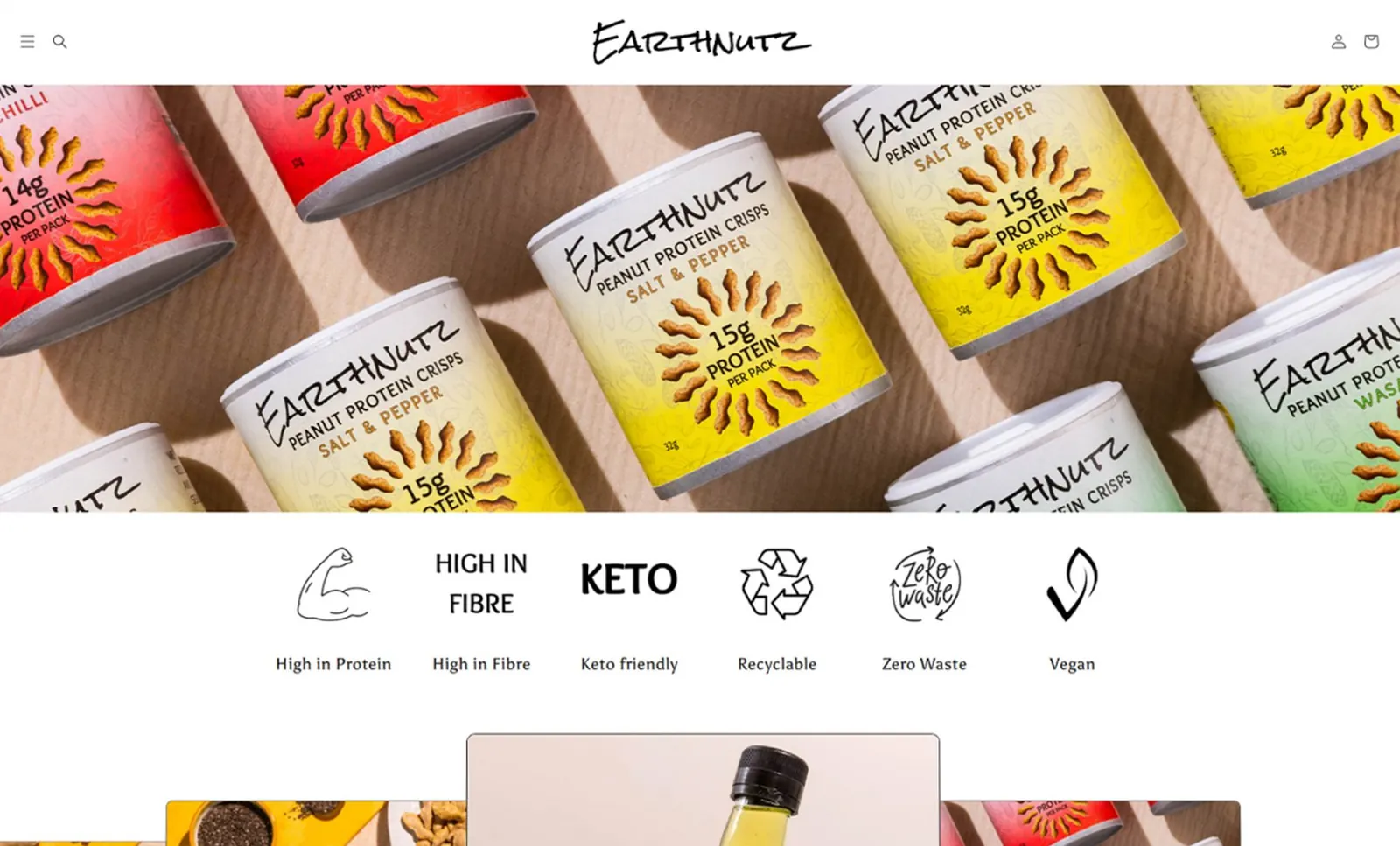
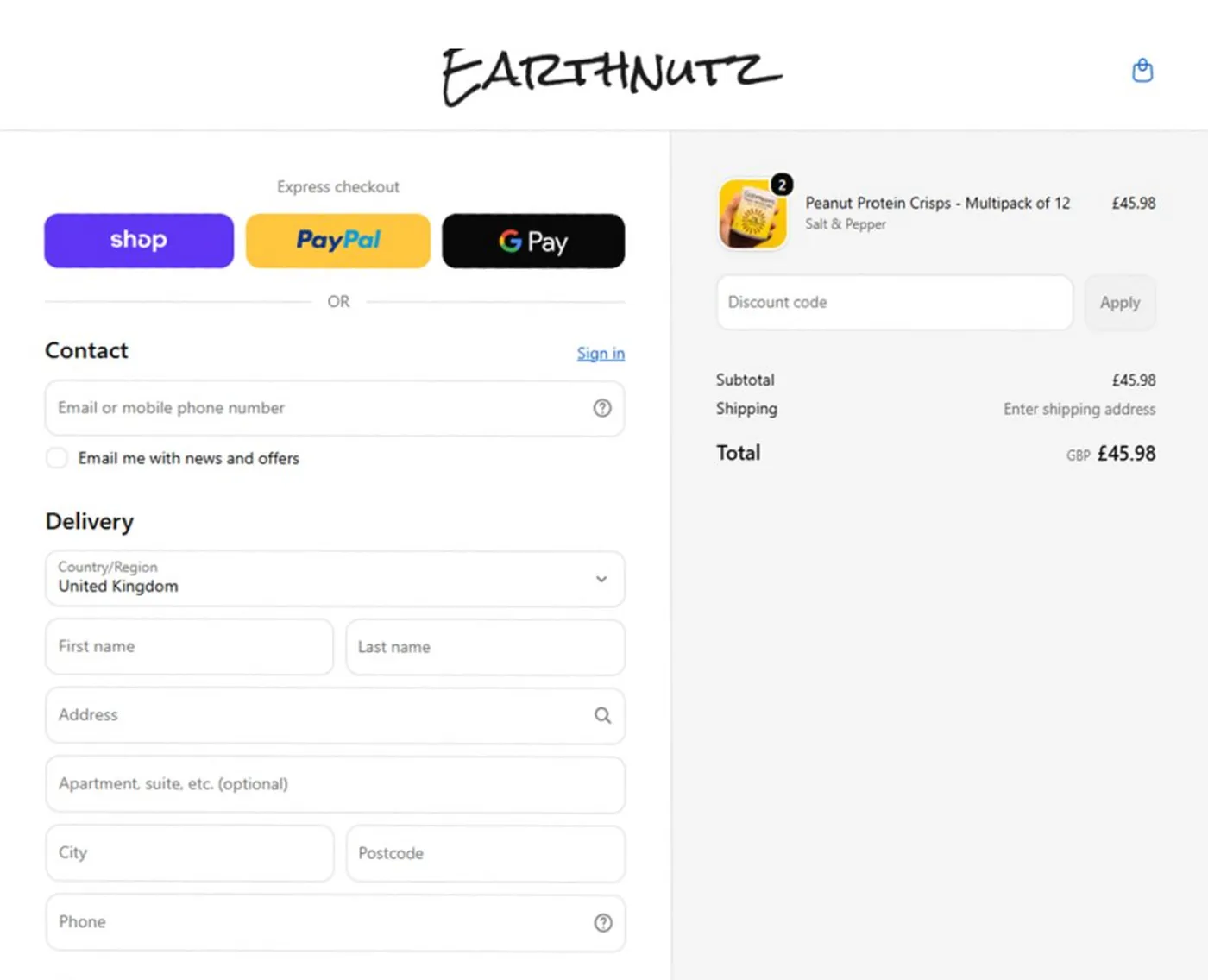
That is the company. Earthnutz makes its crisps and a virgin peanut oil from the whole nut in its own countryside production unit, and sells through its Shopify store and Amazon. Its products contain peanuts and are not for anyone with a peanut allergy, which is exactly why the labelling has to be right every single time.
For a brand born out of one family’s allergy, knowing where every batch of peanuts went is not paperwork. It is the promise on the label.
Salt & Pepper
- Peanut lot
- PN-0417
- Batch
- EN-2409-017
- Best before
- Set per batch
- Traced to
- Every customer order
Allergy advice: contains peanuts. Recorded from raw material to delivery.
The challenge
Growing fast, with the records in six different places
Shopify took the orders. The production unit made the product. Stock, purchasing and batch records lived in spreadsheets and on paper, and none of it talked to the rest.
No single source of truth
Shopify, manufacturing and inventory ran separately.
No end-to-end traceability
No reliable way to follow a batch from raw material to sale.
Batches and expiry by hand
Tracked manually, with the stock errors and waste that brings.
Allergen records hard to keep
Allergen and food-safety records were difficult to maintain systematically.
Fragmented information
Sales, purchasing and production data sat in separate places.
No useful reporting
Near-expiry stock, supplier performance and true production cost went unanswered.
For a UK food manufacturer, each of those is a recall risk.
“They also trawled through pages and pages of food safety regulations - without being asked! - to deliver the best possible result.”
Abby Singh, Founder, Earthnutz · Verified Clutch review, May 2026
“A greater grasp on costs and efficiency in the food production process.”
“They’re very hardworking and a pleasure to work with. I’d recommend them to anyone looking for expertise in this space.”
The solution
One ERPNext system, from peanut delivery to the customer’s door
We implemented ERPNext as the single backbone connecting the Shopify store, purchasing, production and stock, then built reporting on top for inventory, batches, expiry, sales, purchasing and allergens.
 ERPNextone record of the business
Shopify orders
The problem
Online orders lived in Shopify, apart from the rest of the business.
What we built
A Shopify integration that creates the Sales Order, Sales Invoice and Delivery Note in ERPNext as each order progresses.
What changed
Sales flow straight into stock and accounts, with no re-keying.
Purchasing and suppliers
The problem
Buying had no structured record.
What we built
Procurement from Material Request through Purchase Invoice, with supplier management and quotation comparison.
What changed
Structured purchasing information for every supplier.
Manufacturing and costing
The problem
The true cost of a batch was unknown.
What we built
Every product defined by a Bill of Materials, with Work Orders tracking production cost and time.
What changed
Production cost visible per batch, in real time.
Batch and expiry
The problem
Batches and best-before dates were managed manually.
What we built
Batch-wise tracking across every stock movement, expiry-date management and automated reorder levels.
What changed
Near-expiry stock visible in real time, and reordering handled by the system.
Allergens and quality
The problem
Allergen records were difficult to keep systematically.
What we built
Allergen information captured at item level and carried into the relevant sales transactions, alongside quality inspection.
What changed
Allergen data travels from raw material intake to the final delivery.
How traceability works now
One lot of peanuts, followed all the way to the customer
Purchase Receipt
Raw material arrives and is recorded against its batch.
Allergen recordWork Order
The batch is consumed against the Bill of Materials.
Allergen recordFinished batch
A new batch is created with its expiry date.
Allergen recordShopify order
The customer’s order arrives as a Sales Order.
Allergen recordDelivery Note
Records which batch went to which customer.
Allergen record
A trace that used to mean piecing records together now takes under a minute. The answer is already joined up.
| Measure | Before | After |
|---|---|---|
| Batch traceability | ~1 hr a week | Under 1 minute |
| Inventory reconciliation | ~2.5 hrs a week | Real time |
| Manual data entry | ~3 hrs a week | ~2 hrs a week |
| Near-expiry tracking | ~6% of the week | Real time |
| Production cost visibility | None | Real time, per batch |
Project figures supplied by Invento Software Limited, with the client’s permission to publish.
The results
Compliance, clarity and room to grow
- End-to-end traceability, from raw material to final sale
- Improved alignment with UK food-safety requirements for traceability and allergen labelling
- One system in place of spreadsheets, paper records and separate platforms
- Fewer manual steps, and fewer errors with them
Earthnutz can now scale production and take on new retail channels with confidence in its own data.
Questions about ERPNext for food manufacturing
What does this Earthnutz case study cover?
The case study covers ERPNext for purchasing, production, stock and sales, including batch, expiry and allergen records for a food brand.
Does the case study include Shopify integration?
Yes. The page explains how Shopify orders connect with the ERPNext workflow.
Why do batch records matter in food manufacturing?
They connect incoming ingredients, production and finished stock so the team can follow a batch through the operation. The Earthnutz example on this page follows one lot through that chain.
For UK food manufacturers
Running a food brand on spreadsheets?
If you make and sell food in the UK, traceability, allergens and expiry are not features to add later. We have built them into ERPNext before, Shopify included.
Talk to us about ERPNext for food manufacturingMore from us
Related work and practical guides to help you plan your next step.
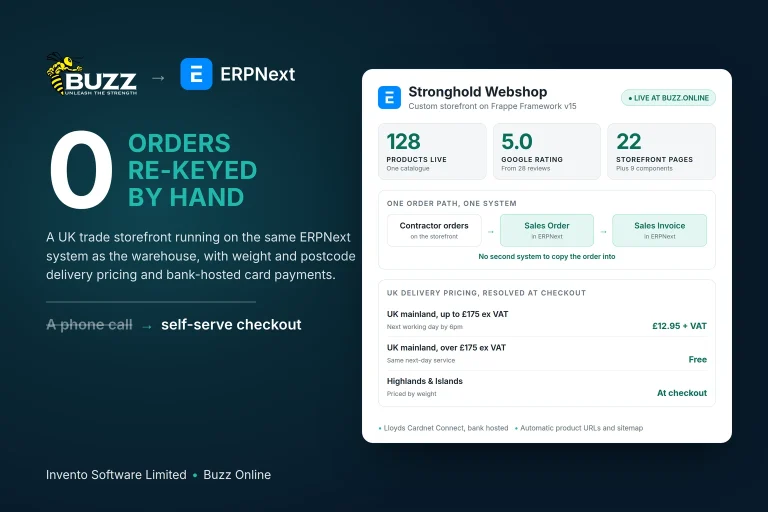 Trade e-commerceBuzz OnlineA trade supplier had a full catalogue, but every order still began with a phone call.Read the case study
 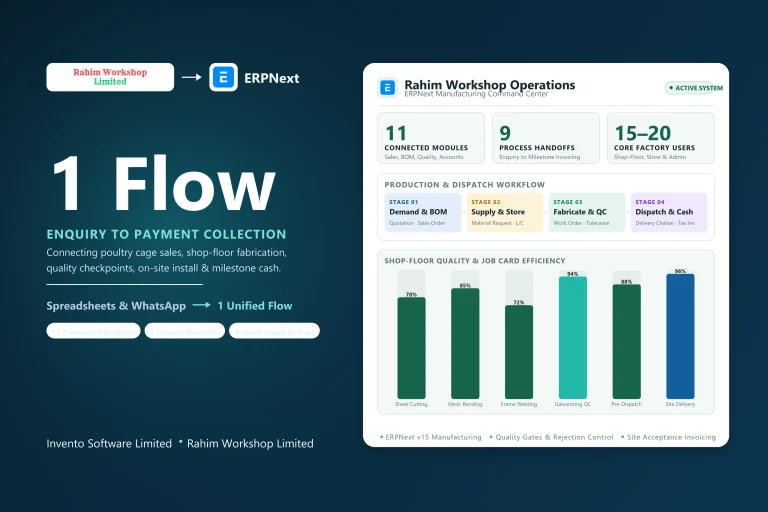 Steel fabricationRahim WorkshopA manufacturing business chose ERPNext. Which handoffs needed to come together?Read the case study
  Garment accessoriesTrade Mode TrimmingThree businesses, paper records and a question about how one system could connect them.Read the case study