

For 25 years Buzz has told wood flooring contractors the truth about which product to use, with no upselling. The advice was never the problem. Taking the order was.
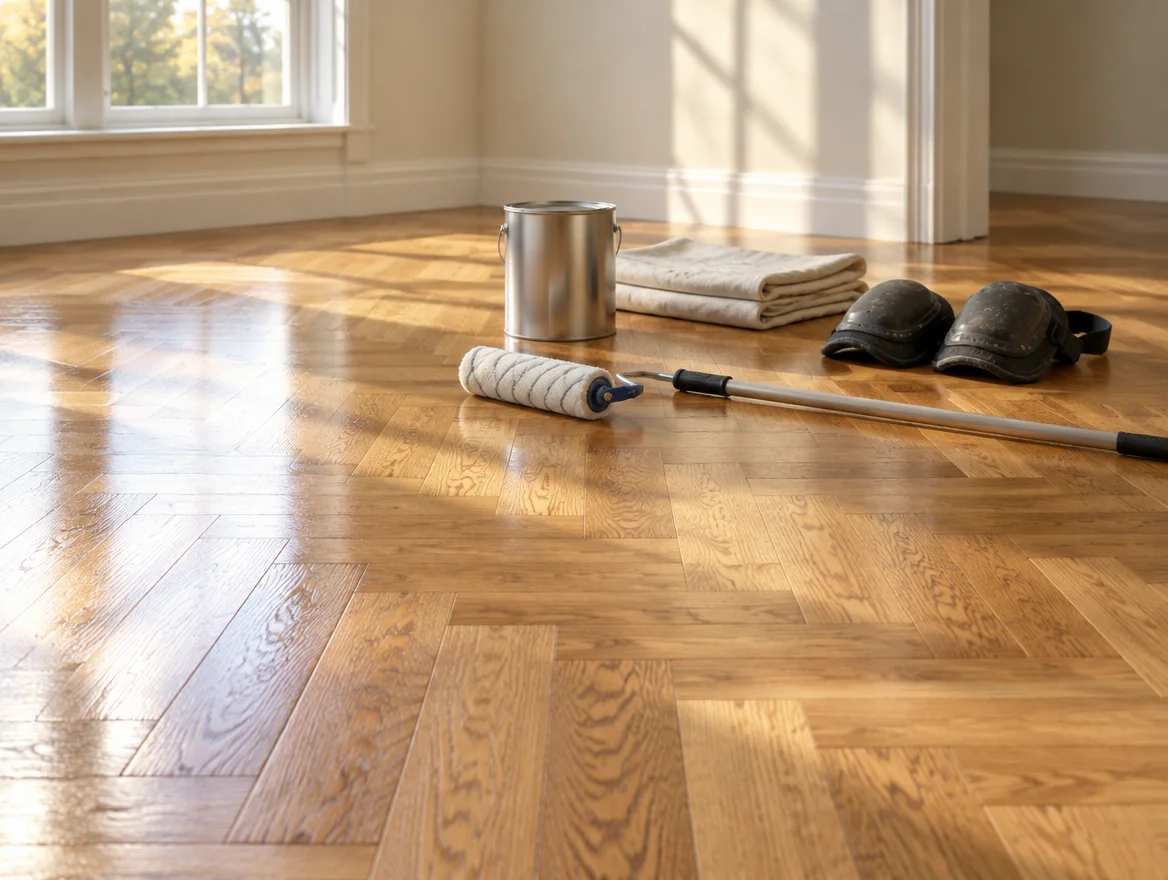
 Frappe Framework + ERPNext
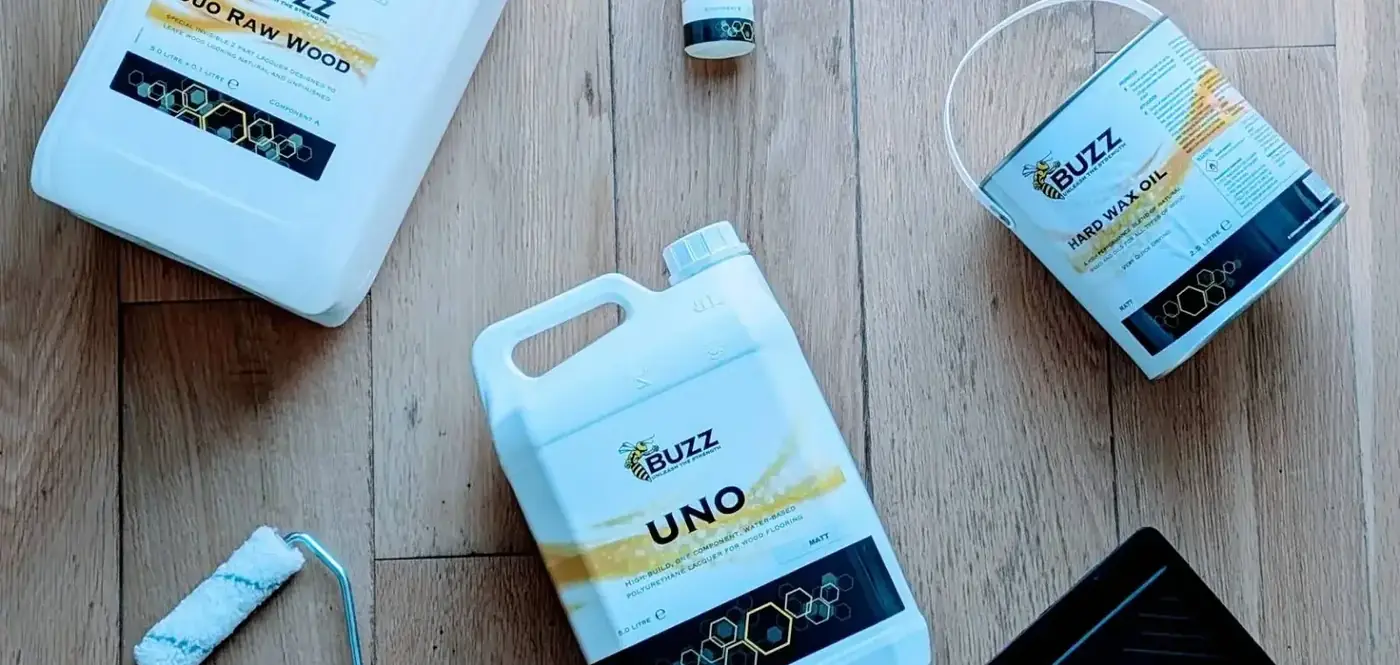
Stronghold Wood Floors has traded out of Biggleswade, Bedfordshire since 1999, run by brothers Bruce and Gordon Cantley. In 2008 they launched Buzz: an own-brand range of lacquers, adhesives, abrasives, hard wax oils, fillers and sanding machines built to be the flooring contractor's default choice, better performance at a lower price than the big names, sourced from the same European manufacturers.

Contractors, interior designers, architects and specifiers, served UK-wide with same or next-day delivery. Prices are quoted ex-VAT, the way a trade buyer expects.
Buzz's own words for its brand promise: straight advice on which product actually does the job, not the one with the biggest margin. The strapline under the hornet reads "Unleash the strength".
Every consumable a flooring job needs in one place, from the original Duo Ultra and Uno lacquers through to underlay and cleaning products.
A contractor on a Thursday afternoon needs three drums of hard wax oil for Monday's job. He rings Buzz. Somebody who knows the products picks up, tells him which one actually suits the floor he is describing, and writes the order down. Later, somebody at Buzz keys that same order into the back office by hand.
Buzz's website had nothing to do with any of it. It was a static brochure: it described the range, and it could not sell a single item in it.
That arrangement worked. It had worked for years. What nobody had added up was what it quietly made impossible.

None of these were the reason Buzz called us. They were what turned up once we asked what actually happened between a contractor deciding to buy and Buzz raising the invoice.
The brochure site carried no live stock and no live ERP pricing. Between the phone call and the order landing in the back office, neither side could be completely sure the number they had agreed was still the right one.
Trade account applications, references, credit checks and bank details were all handled off-line. A contractor who found Buzz on a Friday could not start buying from Buzz on a Friday.
There was no way to take a card at the point of ordering. Every sale had a gap in it between the decision and the money, and every gap is somewhere an order can quietly go elsewhere.
This is the one that compounds. A brand built over 25 years, with a full own-brand range behind it, had not a single product page for a search engine to index. Every contractor searching for a lacquer or an adhesive found somebody else.
Four separate problems, one shared root: the website and the business were two different things.
We built Stronghold Webshop, a custom application on Frappe Framework and ERPNext, with the storefront itself on Frappe Builder. It is not a shop plugin talking to ERPNext over an API. The catalogue, the cart, checkout, customer accounts and the order all live in the same system that already runs Buzz's stock, pricing and accounts.
That one decision removes the re-keying by removing the thing being keyed into. A web order is already a Sales Order the moment it is placed, because there is no second system for it to be copied into.
Storefront, catalogue, checkout, stock and accounts: one ERPNext installNothing on this line can happen after the phone stops being answered.
One ERPNext system. The three manual steps are gone because there is no second system to copy into.
Could your storefront run on the same system as your stock?We map how your customers order today first, then show you what one system would take out of it.
Book a free consultationA trade webshop for heavy flooring goods runs into rules a typical online shop never meets. These three shaped most of the build.
Courier pricing for heavy trade goods depends on where it is going and how much it weighs, together, not either one alone. Postcode-prefix zones, weight-stepped rates and an excess-weight surcharge all have to resolve at once, at the moment of checkout. ERPNext's standard shipping rules cover neither dimension on their own.
BuiltCustom logic extending ERPNext's Shipping Rule engine, with default-rule validation so an order can never check out unpriced.
Live delivery pricing, buzz.online
Standard UK mainland delivery is quoted automatically, and Highlands and Islands pricing, which runs on weight alone, resolves the same way at checkout.
Getting the delivery price right was one problem. Taking the money was a different kind of problem.
A contractor paying online needs that to feel as safe as it is. Handling card data on Buzz's own server would also have pulled the entire build into a far heavier PCI compliance scope, so the card number had to reach the bank without ever passing through Buzz.
BuiltA custom payment controller on the Frappe Payments framework, with integration-request logging and a sandbox test harness verified against Lloyds and Fiserv before go-live.
Card details are entered here
Outside Buzz entirely. Buzz never sees, stores or transmits a card number.
Checkout → Sales Order → Sales Invoice
Receives only the result of the payment, posted against the matching order.
The card number never crosses this line.
Checkout hands the card page to Lloyds Cardnet Connect directly, and a successful payment posts straight to the matching ERPNext Sales Order.
Which left the quietest of the three, and the one with the longest tail.
A catalogue this size cannot be given SEO by hand, and Buzz keeps adding to it. Every new lacquer or sanding belt needs a unique, human-readable URL and a place in the sitemap the same day it goes live, with no duplicates and nobody remembering to do it.
BuiltAutomatic route generation on every product save, a background job that re-checks the whole catalogue for duplicates, and a custom sitemap generator with last-modified dates.
buzz.online/shop/buzz-uno
buzz.online/shop/buzz-duo-ultra
buzz.online/shop/buzz-flexifillLive product URLs, generated on save. Nobody at Buzz types these.
Every published product is in the sitemap the moment it goes live, and no one at Buzz maintains a URL by hand.
Delivery rules, card payments or a catalogue search cannot find — which one is holding your shop back?These are the three an ordinary e-commerce platform hands back to you. We build them into the ERP.
Tell us your blockerThe webshop, the stock system and the accounts are now the same ERPNext install. An order placed at midnight on a Saturday is already a Sales Order before anyone at Buzz is back at a desk, with nothing to re-key and nothing that can drift out of sync.
The shop moved to its own domain at the same time. Buzz had spent 25 years building search authority on the old address, so that had to move with it rather than start again.
25 years of accumulated search authority carried across to the new address.
Order and revenue figures are Buzz's to publish, and they haven't yet. What can be checked today is the scale of what now runs as one system, and the storefront's own live customer rating.
And the part Buzz did not have to build, because it was already true:
The honest advice didn't change. Now it can actually take the order.
Still deciding whether an ERP-integrated storefront fits your business?
Tell us how your customers order today. We'll show you what an ERP-integrated storefront, on your own stock and pricing, would look like.
Related work and practical guides to help you plan your next step.
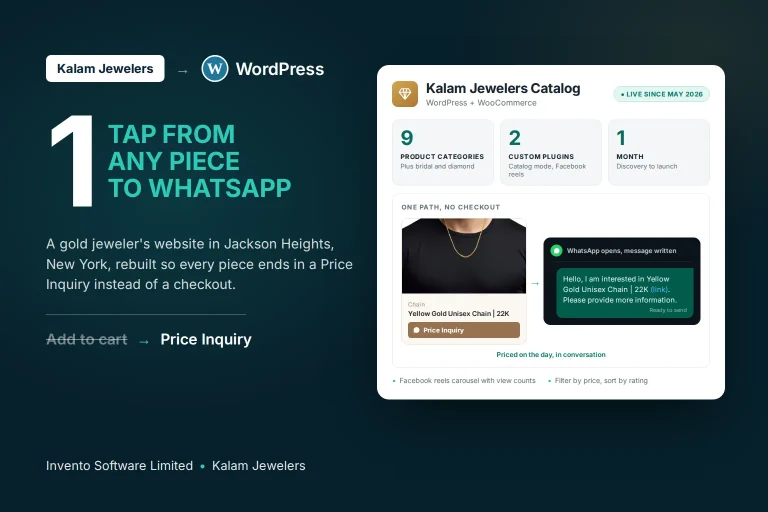 Website designKalam JewelersHow do you build a jewelry website when the sale begins with a conversation?Read the case study
 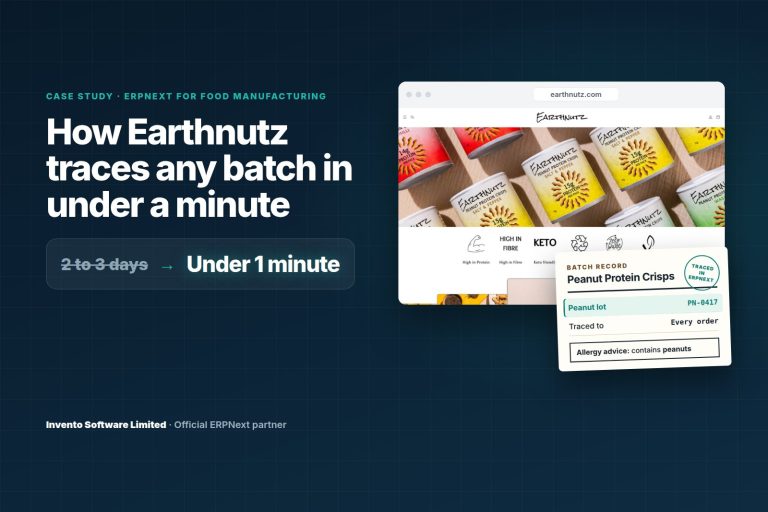 Food manufacturingEarthnutzA food brand born from a family allergy, and the promise it has to keep on every pack.Read the case study
  Advertising and billingSalesforce to ERPNext for a UK media companyPrint and digital campaigns bill differently. What would it take to bring them into one system?Read the case study